
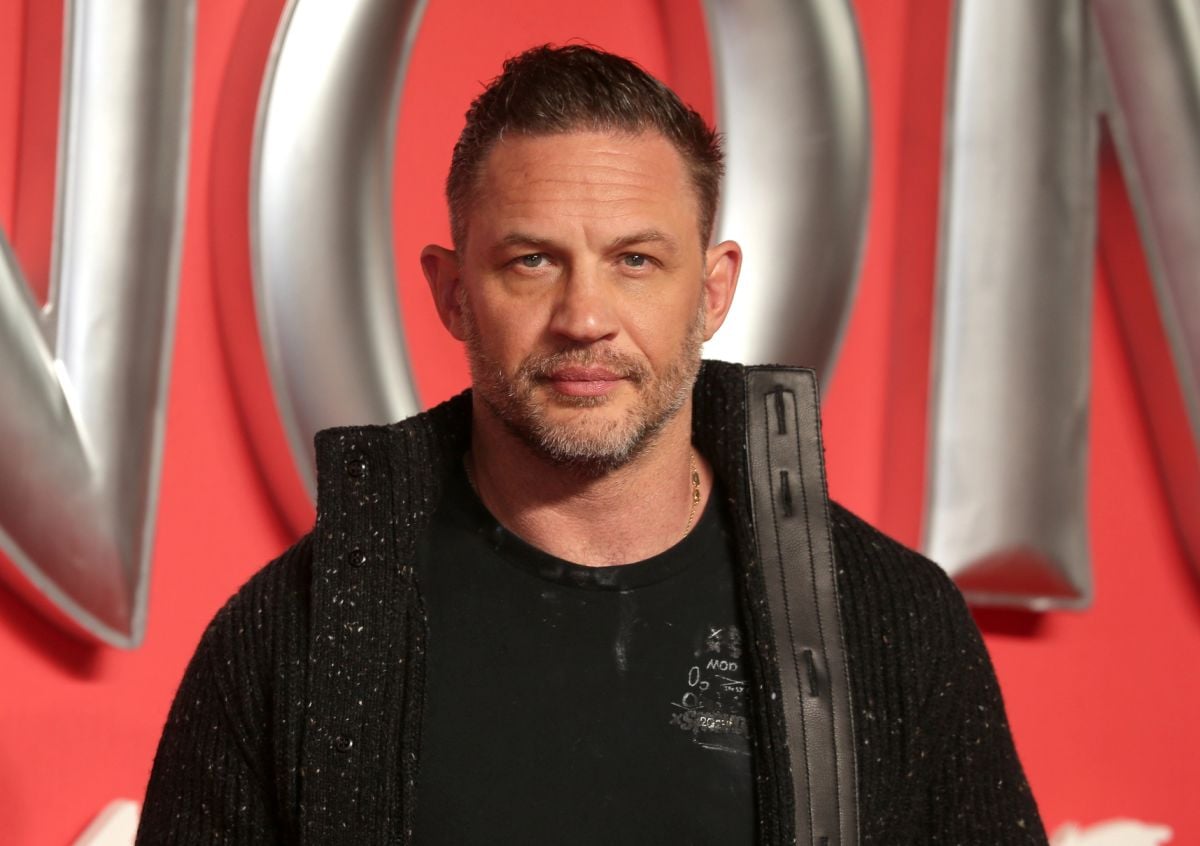
You’ve seen the image. You probably shared it, or liked it, or screenshot it and sent it to someone at 11pm with zero context. Tom Hardy, staring down the camera like a man who answers to no one, above the words: “Of course I’ve had gay sex. I’m an actor for f*ck’s sake. I’ve played with everything and everyone.”
It lands every single time. Because it’s bold, it’s gossipy, it’s shameless, and it sounds exactly like something Tom Hardy would say.
But what most people don’t know is where he actually said it, what he said right after it, and what happened when the rest of the world eventually found out.
Spoiler: it involved a tabloid ambush, a packed press conference, and one of the most perfectly executed shutdowns in celebrity history. All because a man answered one question honestly, in a gay magazine, and then spent years dealing with the consequences.
A Gay Magazine, a Man with Nothing to Prove, and the Quote You’ve Never Seen in Full
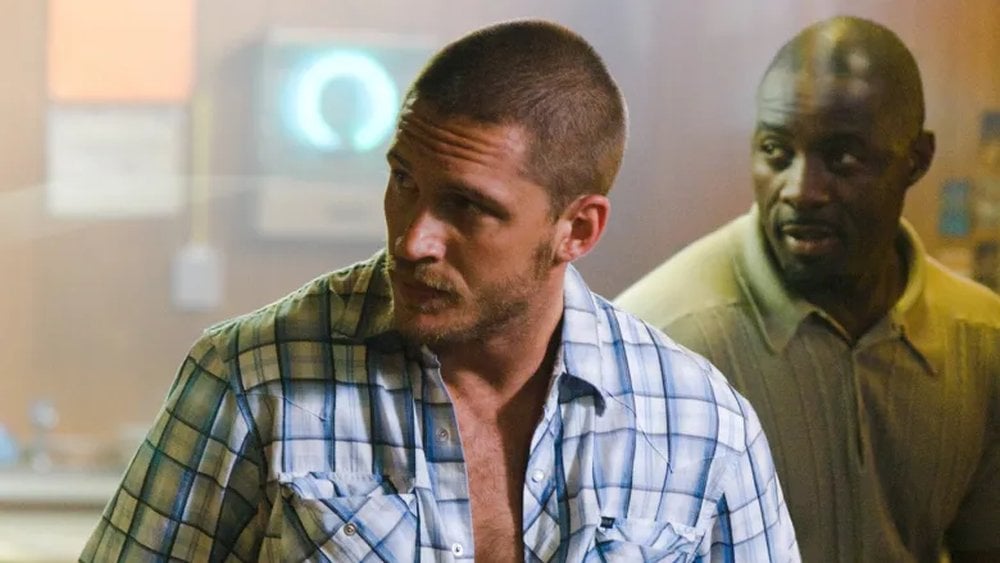
It was 2008. Tom was 30 years old, newly sober after years of serious addiction, and on the promotional circuit for RocknRolla – Guy Ritchie’s London crime film in which he played Handsome Bob, a tough, tattooed gangster who happens to be quietly, devastatingly in love with his straight best friend.
The venue for the interview was Attitude – the UK’s best-selling gay magazine at the time. And Tom was on the cover.
When the interviewer asked, directly, whether he’d ever had sexual relations with men, Tom didn’t pause, deflect, or reach for a publicist-approved non-answer. He leaned in.
“Of course I have. I’m an actor for f**k’s sake. I’m an artist. I’ve played with everything and everyone.”
That was the part that made the headlines. But the part that almost nobody quotes came right after it.
“I love the form and the physicality, but now that I’m in my thirties, it doesn’t do it for me. I’m done experimenting – but there’s plenty of stuff in a relationship with another man, especially gay men, that I need in my life.”
And then, in another sentence that should have been on every poster:
“A lot of people say I seem masculine, but I don’t feel it. I feel intrinsically feminine. I’d love to be one of the boys but I always felt a bit on the outside.
“Maybe my masculine qualities come from overcompensating because I’m not one of the boys.”
That’s not a celebrity dropping a provocative one-liner for attention. That’s someone being genuinely, uncomfortably honest in a room where he felt safe enough to be.
The interview ran. The gay community appreciated it. And then – nothing. The wider world didn’t notice at all.
For two full years, Tom Hardy’s most candid interview sat quietly in the pages of a gay magazine, read by the people it was meant for, and completely ignored by everyone else.
Then, in 2010, he made a small film called Inception – and overnight, every interview he’d ever given became fair game.
Going From Rising Star to Global Phenomenon – and Paying the Price
Inception made Tom one of the most talked-about actors on the planet almost overnight. And when that happens, the tabloids go digging.
The UK’s Daily Mail surfaced the 2008 quotes. But the nuance of the original conversation – the full context, the magazine, the why of it – was stripped away entirely.
What remained was a fragment: a newly famous Hollywood actor had admitted to having sex with men.
The story erupted. Tom’s team scrambled, calling the quotes “out of context.” Tom himself distanced from them, saying he was straight and done with that chapter.
The carefully considered words he’d given to a gay publication in good faith were now tabloid ammunition, and he was in damage-control mode.
It was, at that point, a fairly ordinary celebrity non-scandal. A quote resurfaces, a team panics, denials are issued, the story fades.
Except it didn’t fade. Because Tom Hardy kept getting cast in roles that kept pulling the story back to the surface.
The Press Conference Heard Around the World
Five years later, in September 2015, Tom arrived at the Toronto International Film Festival to promote Legend – the film in which he played both Kray twins simultaneously, including Ronnie Kray, who was openly bisexual.
It was, objectively, one of the most impressive technical performances of his career. Playing two characters in the same frame, building two distinct physical and emotional worlds, doing it convincingly enough that you forget you’re watching one man.
The press conference room was packed. Tom was at the height of his powers. And then a reporter from the Canadian LGBT outlet Daily Xtra, a journalist named Graeme Coleman, raised his hand.
“In the film, your character Ronnie is very open about his sexuality. But given interviews you’ve done in the past, your own sexuality seems a bit more ambiguous. Do you find it hard for celebrities to talk to media about their sexuality?”
The room tensed.
“What on earth are you on about?” Tom said.
Coleman rephrased.
“I don’t find it difficult for celebrities to talk about their sexuality,” Tom replied. “Are you asking me about my sexuality?”
“Um… sure.”
“Why?”
Silence.
“Thank you.”
And he moved on to the next question, as if the previous thirty seconds had never happened.
The clip went viral within hours. The internet largely applauded Tom for the shutdown, forgetting that in the past, he had no issue answering questions about his sexuality.
Coleman was publicly shamed in ways that were, by his own account, genuinely distressing – he later said the reaction made him “feel like a bad person.” Tom, meanwhile, was being celebrated for the precision of the takedown.
But Tom’s own response, given a few days later, was more complicated than the clip suggested.
What He Actually Said When the Cameras Weren’t Rolling
In an interview with Entertainment Weekly shortly after, Tom pushed back on the idea that he’d objected to the question itself.
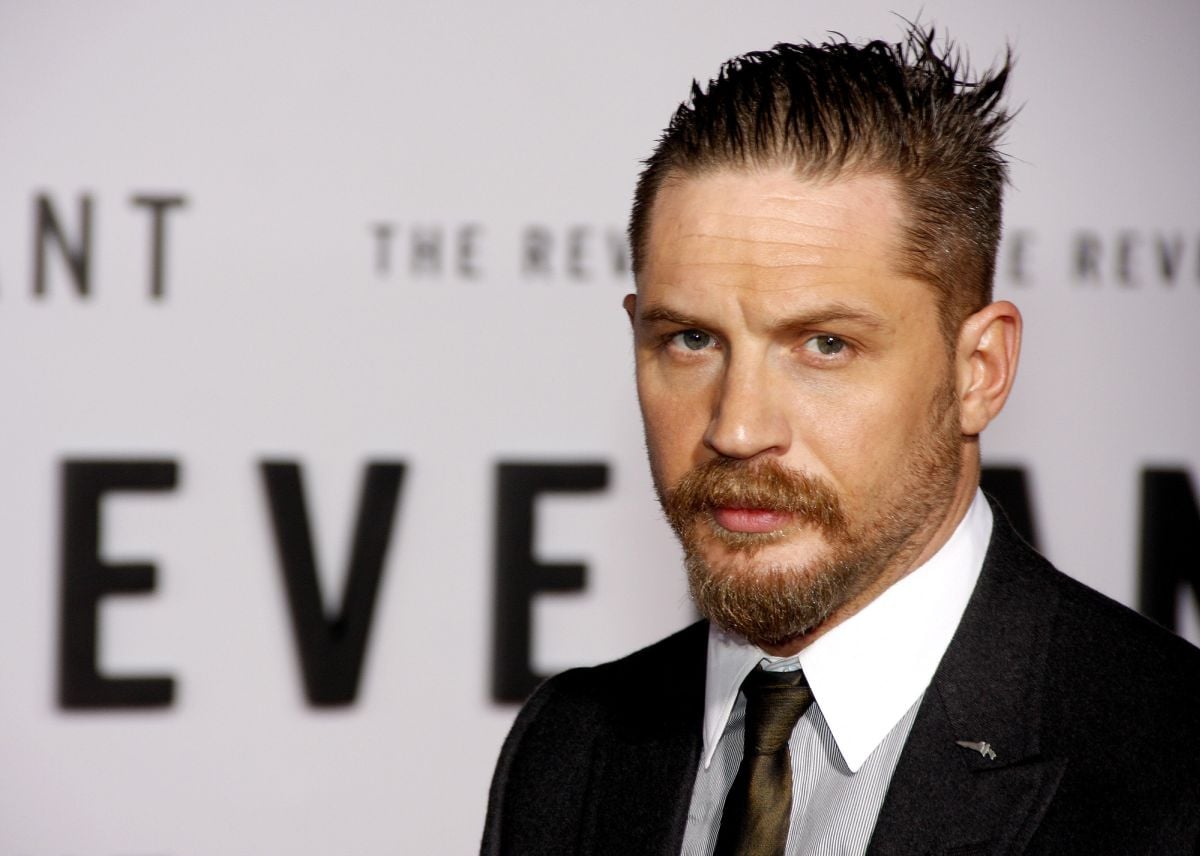
“That really, really annoyed me,” he said. “It was just the inelegance of being asked in a room full of people.”
He wasn’t, he insisted, hiding anything. He wasn’t offended by the subject. His issue was the ambush – being cornered in front of journalists and cameras, with no way to answer honestly without the context being stripped away again, just like it had been in 2010.
“I’m confident in my own sexuality,” he said. “But there is a time and a place for that.”
And then came the line that doesn’t get quoted anywhere near enough:
“Should I come out of the closet when I’m not in one? I ought to maybe come out of the closet, even though that’s a lie, to do the right thing. Or, if I say no, then I’m homophobic? And it’s like – why? Whose business is it anyway?”
He also said something that showed he understood, on some level, the weight of the moment for others: “I feel like I’ve let people down for something that I actually didn’t ask for, for something that’s important to a lot of people.”
That’s not the response of someone who is ashamed. That’s someone who gave his honest truth once, watched it get mangled beyond recognition, and decided the world didn’t get another shot at it.
The Quote That Won
Tom Hardy has said almost nothing on this topic since 2015. He’s become one of the most private major actors working – married to actress Charlotte Riley, protective of his family, giving increasingly few personal interviews.
And yet the quote from 2008 keeps circulating. Gay Social Media revives it every year on his birthday. People screenshot it, post it, send it to group chats. It has the durability of something that rings true, regardless of whatever came after.
Because here’s the thing about that original Attitude interview: he wasn’t performing. He wasn’t being provocative for column inches.
He was a 30-year-old man still finding out who he was, talking openly in the pages of a gay magazine about desire and identity and not quite fitting into the box everyone expected him to occupy.
The tabloids took that and turned it into a scandal. A press conference turned it into a punchline. PR management tried to bury it entirely.
None of it worked.
The man sitting across from an Attitude journalist in 2008, being honest with himself and the community he was speaking to, is still the most interesting version of this story. Still the one people keep coming back to.