
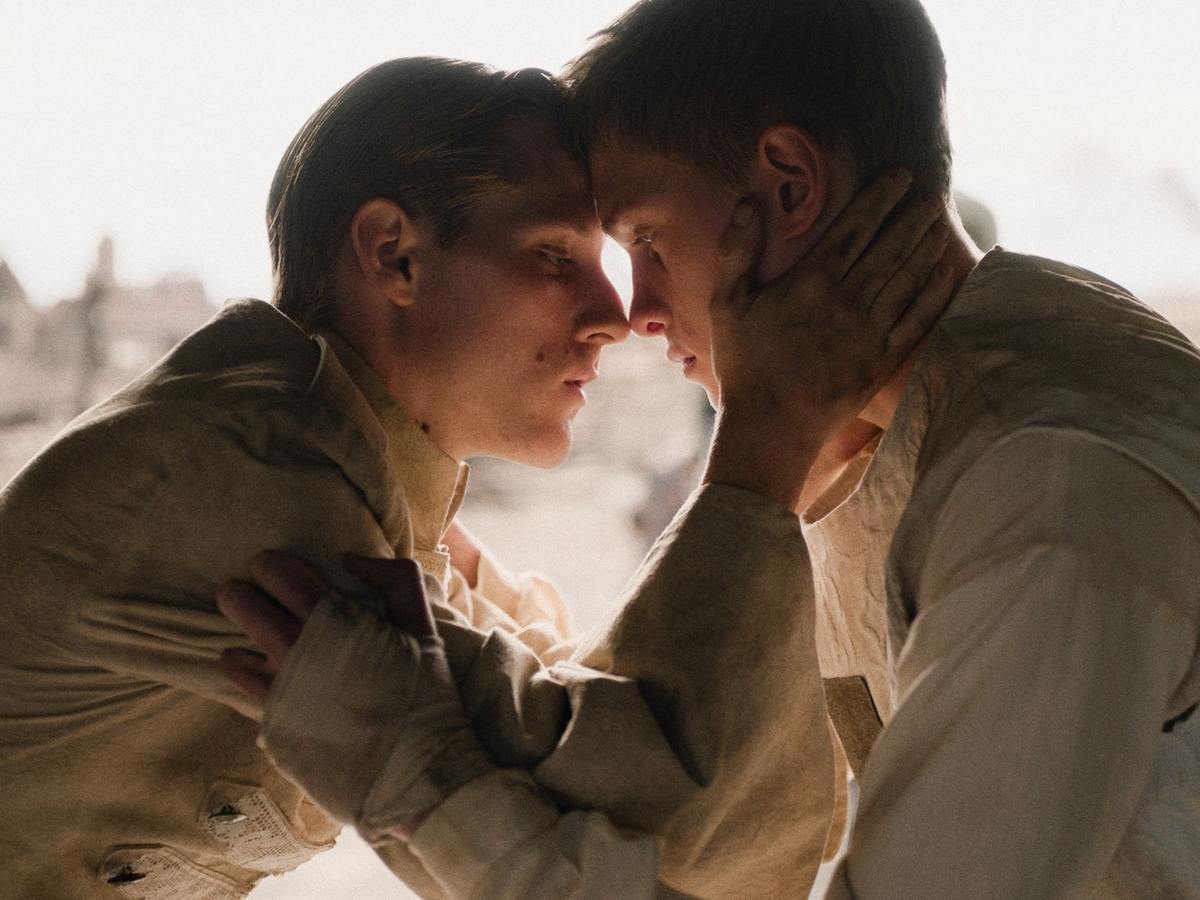
The new trailer for Coward, a gay love story set in the trenches of World War I, is built on a piece of history most people have never heard of: soldiers who spent their time off the front line in wigs and sandbag skirts.
The film comes from Belgian director Lukas Dhont, whose last movie, Close, was nominated for an Oscar. Coward got a 13-minute standing ovation at Cannes in May, and its two unknown leads shared the festival’s Best Actor prize. Belgium has picked it for the Oscars, and MUBI opens it in US theaters on Christmas Day.
And yes, the drag really happened.
It Started With One Photo In A Paris Bookshop
A few years ago, Dhont was browsing a bookshop in Paris when he picked up a book about cross-dressing. In it was a black-and-white photo of soldiers dancing on a stage.
When he looked closer, he saw what they were wearing. The skirts were made from sandbags, and the jewelry from old ammunition.
Dhont grew up in Belgium, where World War I is drilled into every schoolkid and the military cemeteries are part of the scenery. He told The Brussels Times that he still drives past them on his way to see his boyfriend, and that he had never once seen pictures like these.
War films, he argued, are full of brutality and almost empty of tenderness. “We have pushed those images to the front, and we have forgotten and made those images of softness and of expression rather invisible,” he told Reuters before the Cannes premiere.
So he and co-writer Angelo Tijssens went digging in archives in Belgium, France and the UK. What they found was a whole drag culture on the Western Front.
Drag Was Everywhere On The Western Front
It was a lot bigger than a few soldiers goofing around. According to the Imperial War Museums, concert parties and theater troupes sprang up on every front, and France and Belgium had the most. Female impersonators were “hugely popular.” Officers liked what the shows did for morale, and with no women around, men played every female role.
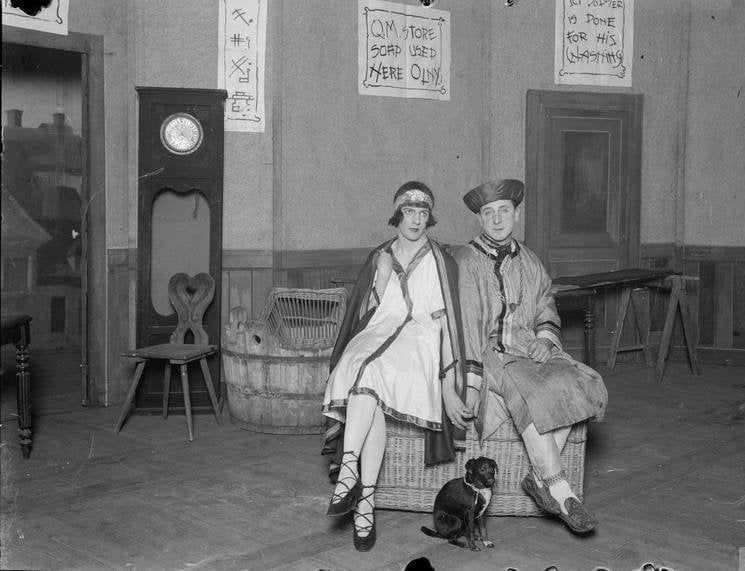
Queer historian Sarah Worthman told CBC that every division of the Canadian and British forces would have had a female impersonator in its concert troupe, potentially hundreds of performers in all. Plenty of queer men were drawn to the job, she said, because it let them receive affection from other men in public.
One of the biggest stars was Ross Hamilton, an ambulance driver from Nova Scotia. In 1917 he became Marjorie, the leading lady of a Canadian troupe called the Dumbells. His first drag costume was made from tent canvas, rosary beads and pillow feathers.
Soldiers called him “a bathing suit beauty,” historian Aly Firth writes. According to Worthman, Marjorie got so popular that Hamilton had to get out of costume before walking back to the barracks, or he’d be mobbed.
His story didn’t end well. Hamilton signed up again in World War II and kept performing, until his sexuality came to light at an army camp in Ontario. He was discharged in 1941. On stage, a man in a dress was a morale booster. Off stage, a man who loved men was a problem.
The drag didn’t always stay on the stage, either. In soldiers’ diaries, Dhont read about men sharing beds, and about one soldier who put on a sandbag skirt and bonnet to play “mother,” going around at bedtime to kiss the others good night.
“None of this is fiction or fantasy,” Dhont said in an interview with the Cannes Film Festival.
Inside Coward’s Love Story
Coward isn’t based on specific people, but the history is all over it. It’s 1916, behind the Belgian front line.
Emmanuel Macchia plays Pierre, a quiet farm boy who arrives wanting to prove himself and gets put to work hauling shells and carrying the wounded. Then he meets Francis, played by Valentin Campagne, a flamboyant soldier who’s putting on a theater show for the troops.
Francis, a tailor before the war, puts those skills into the costumes and takes the stage in drag. Pierre gets roped into painting the scenery, and as the show comes together, so do they.
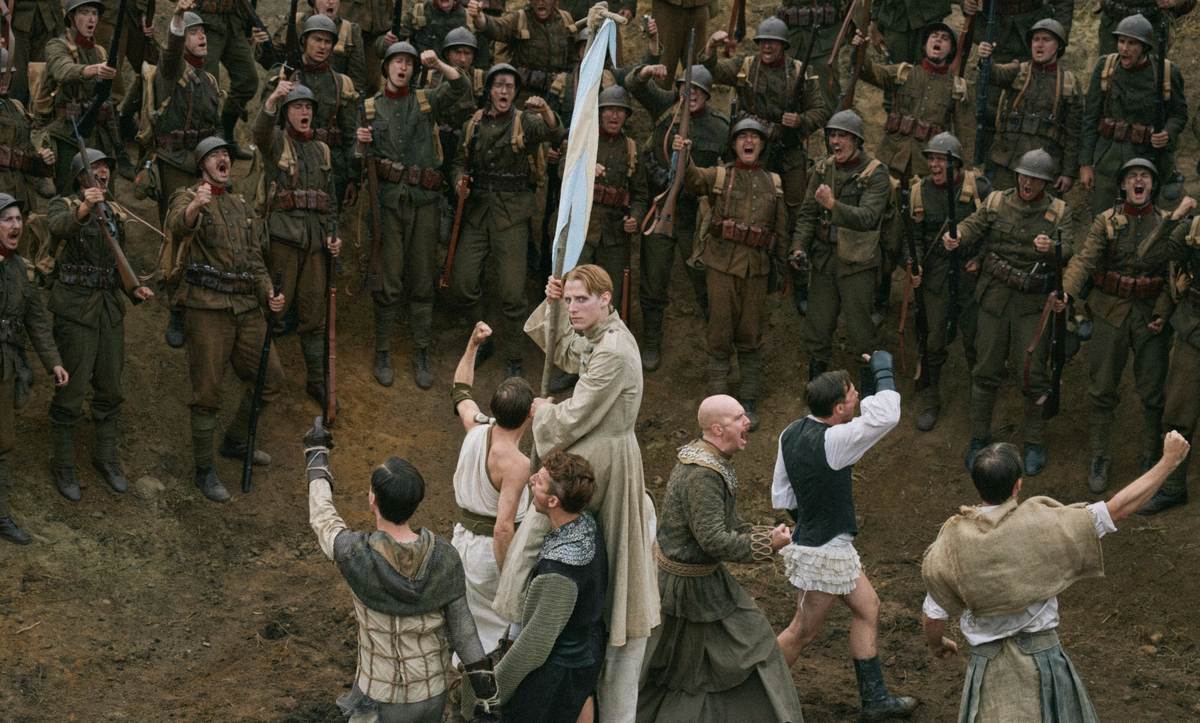
There’s a catch: the only time they can show each other any affection is in character, in costume, in front of everyone.
“These men live in a time where their love had to be unspoken, had to be incredibly silent,” Dhont told Reuters. “But weirdly enough, the war at that time brought them together.”
You can see it in MUBI’s new trailer:
Two Newcomers, One Shared Best Actor Prize
Dhont likes to find his actors far from drama school. To cast Pierre, he went to agricultural schools in Belgium, looking for someone whose body had worked the land.
He found Macchia in a school courtyard. Macchia came over to talk to him in a whisper, which Dhont told the festival is “exactly what Pierre’s character is like.” Coward is his first acting role.
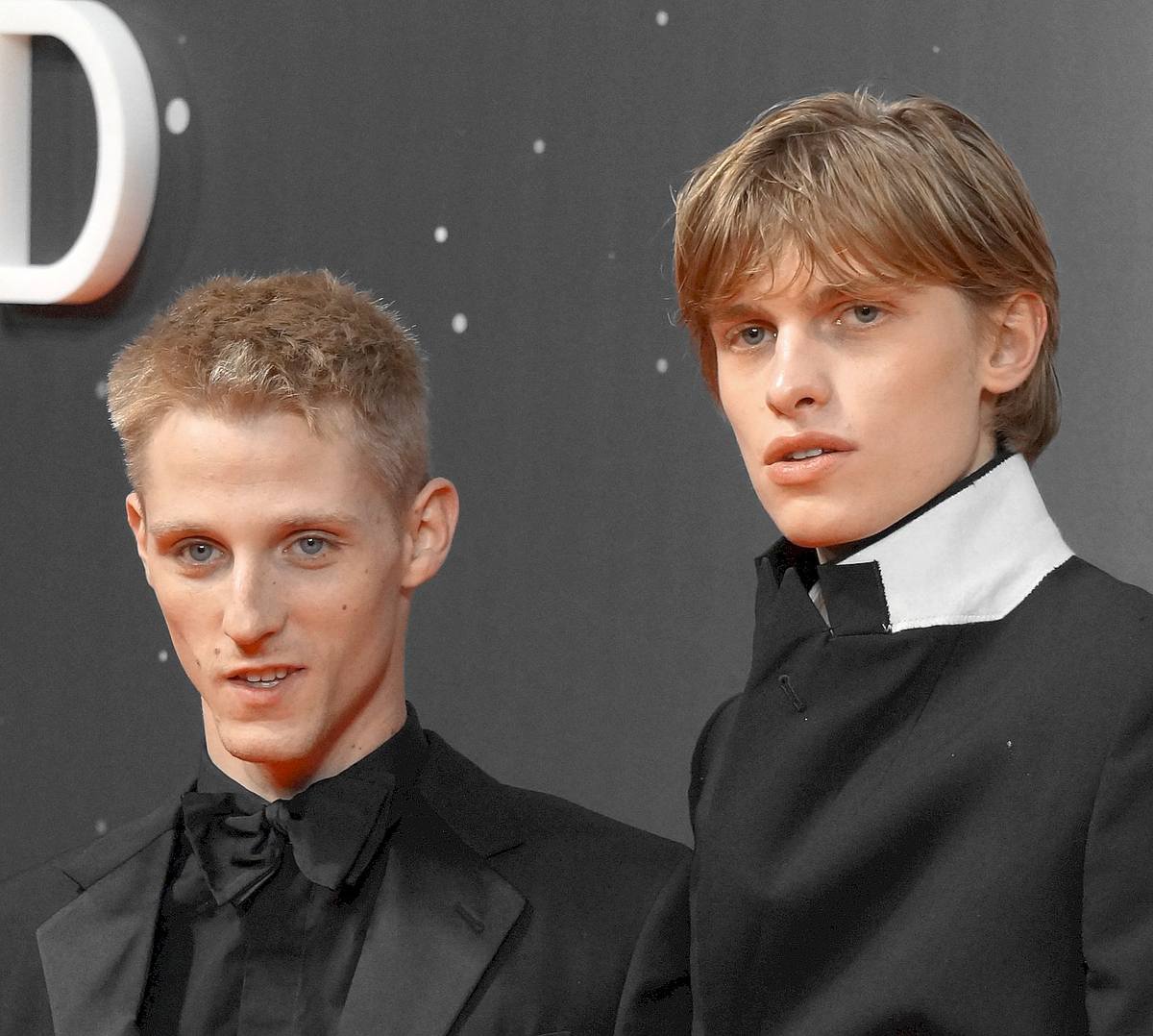
For Francis, Dhont wanted the opposite: an extrovert who could dance, sing and perform. Campagne wasn’t a professional performer either, but Dhont says that when he moved, you wanted to see what he’d do next.
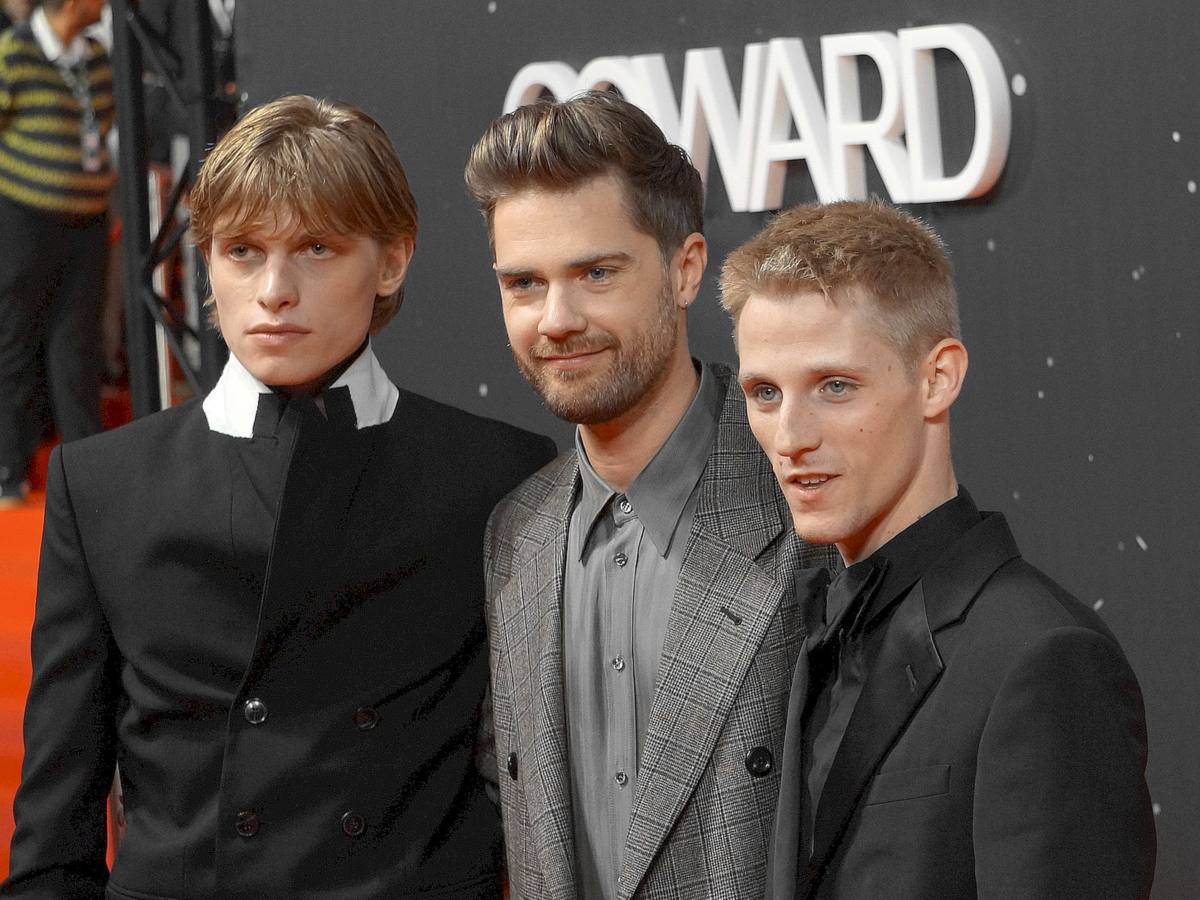
The gamble paid off. At Cannes, the jury gave the Best Actor prize to both of them together. Dhont told The Brussels Times he doubts the pair even knew a shared award was possible, and that you can see on Macchia’s face during the announcement that it hadn’t sunk in.
Dhont, 35, has been a Cannes favorite from the start. His debut Girl won the Caméra d’Or there in 2018, and Close took the Grand Prix in 2022 before landing its Oscar nomination. He has talked about being bullied as an effeminate kid and only coming out at 21, in film school. Love that has to stay quiet runs through all three films.
When You Can See Coward
Coward is already playing in Belgium and opens in France on November 18. MUBI releases it in US theaters on December 25. It’s also Belgium’s entry for Best International Feature at the 99th Academy Awards, the race where Close made the final five.
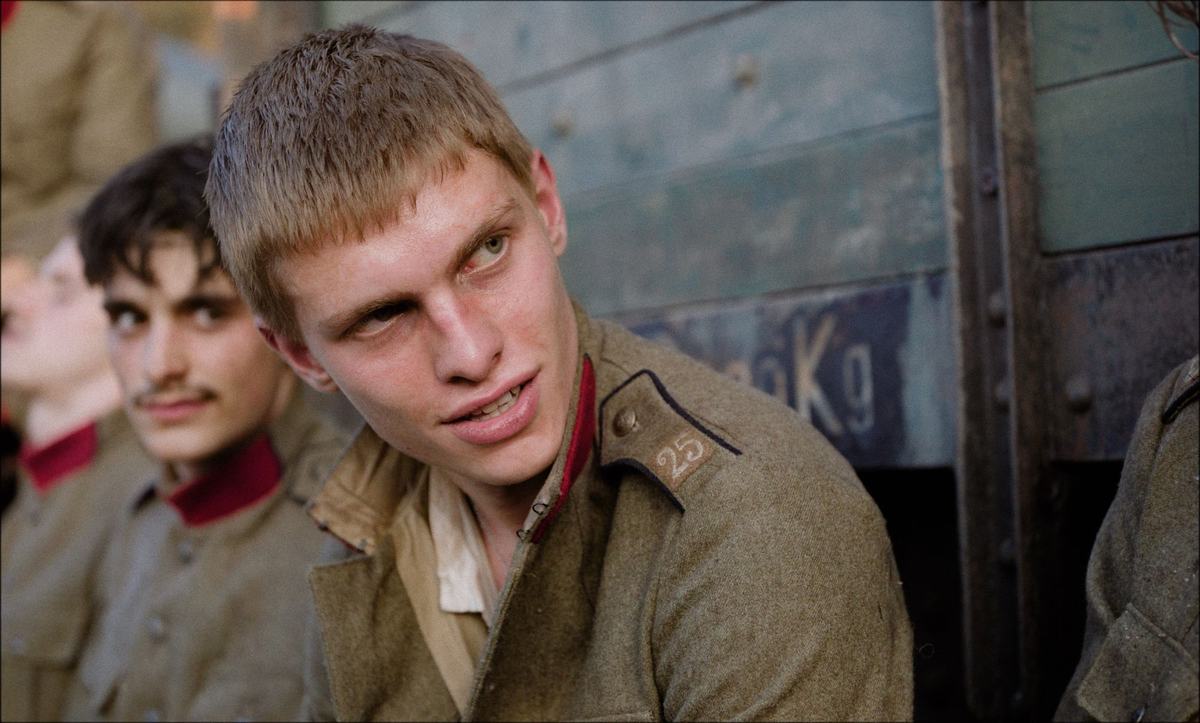
Dhont told The Brussels Times that Pierre and Francis choose love at a time when it “could not speak its name,” and that choosing it takes courage. That’s a pointed thing to say about a film called Coward.
A century ago, those soldiers in sandbag skirts ended up in a book few people ever opened. This Christmas, they get the big screen.